-
I Think I’d Choose My Life Again

Last year I was on the phone with my friend Haven, complaining about my life…something about how it w unfair that I was brought into this world without my consent.
“And like, I didn’t even ask to be here! And now I’m stuck here having to work to pay rent and buy food and get shitty healthcare. You know? Isn’t it ironic that it’s illegal to kill myself, but I didn’t even choose to be alive in the first place?”
“Hmmm,” Haven considered. “But, I think I did choose to be here.”
I paused, confused. “Uh…what do you mean? How could you do that?”
“Well, I think that maybe before I came to Earth my spirit was given the option to come have the human experience. I didn’t have to say yes, but I think I would choose it if given that chance.”
My first thought was, “well that’s ridiculous,” but I didn’t say so. I stood in my room, stunned to silence at such a whimsical but pleasant possibility of a Self before Haven’s life on Earth; one that could choose to live an imperfect human life for the sake of the experience.
“Wow,” I considered. “That’s…actually a pretty empowering idea. It removes the responsibility of your life from your parents, and gives it back to you.”
“Yes, exactly,” they agreed. “And isn’t it more helpful and positive for me to behave as though this life is something that I wanted to come here to live out, despite the cost of living and the shitty healthcare? How does it serve anybody to view their life as something that they were powerless to choose and cannot end?”
Suddenly I felt embarrassed for complaining about being brought into the world. Yes, life is hard. But hard doesn’t automatically mean bad. Do people not grow the most when they overcome challenges? Do we not more deeply experience joy when we understand the depths of grief?
It made me wonder, if I was a spirit floating through space outside the dimension of time, and a powerful entity came to me and said, “Hey Spirit, you can keep on floating through space if you want, but there’s a human body on Earth about to be born if you want to inhabit it and experience her life. It might be a really hard life, but you’ll get to see the beauty of the planet and experience the spectrum of human emotions while you’re there. You want to try it out?”
Dude, I know I would say hell yes. Maybe even HELL YES! My life has been full of painful experiences and difficult challenges, but they have been outshined by beautiful people and abundant love. Life is not all good or all bad, it’s a balance of both, and it is that balance of both that is the human experience. I often wonder if feeling the full spectrum of possible emotion is—dare I say?—the point. Heartbreak has allowed me to appreciate the full beauty of falling in love. Feeling deep loneliness has contextualized the significance of sincere friendship. Without these painful memories, I’d take what I have now for granted; therefore, I feel gratefulness for my past. Not only does it show me how far I have come, but it is proof that I can overcome anything else in the future.
You might be reading this thinking, “That’s nice, but it’s not true. I can’t act like I chose my life when I actually didn’t.”
But how do you know? If you believe you are more than a brain existing inside a meat-suit, tell me how you know that your Self sparked into existence after your parents had sex? Can we scientifically know?
I don’t think we can. And for the things we can’t truly know, I think it’s okay to fill in the blanks with what is most helpful for our existence now. Our imaginations can be used as tools to improve our experiences. Blaming my existence on my parents choosing life for me made me feel powerless and resentful. It was a mental roadblock for me. Imagining instead that I made the choice to be here despite the challenges of our flawed existence gives me agency over my life now, and I feel at peace with the fact that while my life is sometimes hard, I have the gift of the human experience. I think that I even like who I am becoming.
I chose to be here. I am grateful for the opportunity to be here. Each challenge that I overcome is a level up in the game. However you choose to contextualize your life, I encourage you to choose a mindset that helps you while you are here.
-
“I’ll Pray For You”

Honestly, is there anything more condescending?
“What? No! That’s not how I mean it!” you might protest if you’ve uttered this phrase. Listen, I understand what you might be going for (“I care about you”) but that’s rarely how it comes across to the people that you feel the need to say it to. Tell me, did they ask you for prayer before you told them you’d be doing so?
“I’ll pray for you” is Christianese for, “I think that you are not following God’s plan, and I’m judging you so hard for it that I’m going to spend my time asking God to make you start doing what I think you should be doing with your life to win back God’s favor along with mine.”
It’s one of the many ways that the church has given Christians permission to openly judge another person for living their life; while I hate it, I also understand it because I once belonged to this kind of community.
Imagine this: you’re born into a community that staunchly believes they have found the rule book for life and instructions on how to live forever. On its own, growing up being told that you are right and everyone else in the world is wrong (punishable by eternal torture) is very problematic and instills entitlement on AT LEAST a subconscious level. Add to it that the rule book you have lays out all the ways you must live in order to be worthy, and you now have a life template against which to compare everyone you know, and spiritual permission to decide if people are doing it right or not.
Like…of course judgmental Christians are the result of that upbringing. I certainly was.
But it gets even more complicated. Christians are also told they have this superpower called Prayer, which they can use to communicate with God to ask for the things they want. Sometimes the things people pray for are noble, like World Peace.
Sometimes they’re political–“Dear God, please help this candidate win the election instead of the other.”
Sometimes they are deeply personal: “Please don’t let dad die.” “Please help me get this job so my kids and I don’t end up on the street.”
Sometimes they’re petty: “Jesus, please let me find a parking spot close to the mall entrance–oh look, there’s one! Thank you, Lord!”
Sometimes prayer is nosy: “God, I heard that Leona lost her faith and I worry about her marriage being unequally-yolked with her Christian husband. Please let Leona find her way back to you, and please, please, please don’t allow her to pull her husband away from you while she is lost.”
Sometimes, prayer becomes gossip, disguised as a “prayer request” in a conversation that doesn’t include the person being prayed for. “Did you hear that Leona doesn’t believe in God anymore? Do you think she and Brennon with get a divorce? I can’t imagine how distressed he must be over his wife falling away from their faith… Last time I saw them they did seem a bit disconnected from each other. Maybe someone should talk to his parents about it–you know, for extra prayer power… Speaking of prayer requests, please pray for my boyfriend because I feel like God is telling me to break up with him…”
It’s taught that prayer isn’t a one-way conversation, that God sometimes communicates with Christians too, but not in the same way that we talk to him. While we send verbal prayer up his way, God is more mysterious, and we’re told he will communicate with us personally, sometimes so subtly that you can miss it, and certainly not so obviously that it’s verifiable by anyone else. In fact, I’ve been told by other people that God told them to tell me something about me and my life that I didn’t even know about! (“God told me that you have an eating disorder.”) You’d think if anyone would know about that, it would be me, right? The person who told me this didn’t know me personally at all, and when I cast doubt on her claim, she told me that I was in denial, being deceived by Satan, and also, woah, who was I to question God?
That is the problem. Pulling the “God told me” card is a power move that anyone can try to pull without any way for anyone to verify whether this is remotely the case. Christianity allows God to work so mysteriously that people can say they’ve heard from God and it’s technically not disprovable. It’s hard to argue with.
This doesn’t mean that people believe everything that everyone says about God–hence why we see so many established Christian denominations. Of course, every Christian thinks that their interpretation of the Bible and their personal spiritual insights are THE ones that will get them to heaven, but if their theology differs from their church, they’ll just split and start a new one. Maybe they’ll take half of their old congregation with them (but it’s not poaching if it’s in the name of saving their souls
and taking their tithe money).I feel about hearing from God how I feel about social media. On social media, you can take a picture and crop it and edit it and add a filter and caption it however you want, and posting it makes it the truth as far as other people can tell. Maybe I look at your picture and compare it to the ones in my phone and think about how much better your life appears to be.
When I was a Christian people talked all the time about hearing from God; finding “Rhemmas” in the Bible–personal insights God revealed to you in scripture–was a common thing in my social circles, and it was fully expected that if you were a real Christian you would find them too. If you were facing a fork in the road of your life and you didn’t know which way to go, it was expected that you’d pray about it and God would show you the way. Sometimes other people would pray about it too and tell you what God revealed to them. Especially if it was your parents who felt compelled by God to make a certain decision for your life, you as a kid had no recourse, and if you disagreed and refused, not only were you disobeying your parents, but you were rebelling against God’s Will for your life (a family crisis!)
All of those potential issues aside–what if you didn’t hear from God? What if praying felt like talking to a wall? Were you sane amongst a group of crazy people, or were you broken? Did God just not want to talk to you? How come nobody else was talking about all the silence? It must be just you. If you didn’t want to be questioned or made fun of, it was in your best interests to just play along and make stuff up. Crop, edit, filter, post. “God told me to tell you…”
There were many parts of my upbringing that caused me to develop anxiety as a kid. But anxiety wasn’t the word I would have used then–it was “convicted.” My conscience was extremely sensitive, built from years of self-doubt (“I’m a sinner incapable of doing good on my own”) and fear of being tricked by Satan (“he is so sneaky and wants to keep us from God”). I had no confidence in my own judgment, and I was taught from an early age that my feelings weren’t to be trusted–just an unfortunate side-affect of my humanity. The only thing I could trust was God’s direction…if only I could find it, hear it, see it.
Any time that any person suggested that I do something–apologize, evangelize, donate, volunteer, speak up–I felt obligated, and if I felt fear, anxiety, or any of those other feelings that sit in your gut and make you generally uncomfortable, I interpreted that as conviction from God that this is what I should do. Any bad feelings seemed to prompt conviction, and my fear of God overcame my fear of any of the things I thought I was being led to do. This included public speaking at my church in front of hundreds of people multiple times between the ages of eight and eleven. I never wanted to do it, but I didn’t believe that my feelings mattered. The worse I felt about it, the more convicted I thought I was. My parents never forced me to do anything, but years of spiritual teaching and manipulation in the midst of my brain development certainly made me easy to coerce into doing whatever I thought God (and by extension my parents) might want from me.
My interpretations of what God wanted from me bordered on superstition. While it often came down to “I have a bad feeling, so it’s probably God,” sometimes I’d tell God to give me a sign as yes or no for whatever it was I wanted direction for. Maybe there would be a bright break in the clouds after church and I’d look up and wonder, “God, is that you shining down on me telling me it’s okay to stay friends with Brett, even though he is a boy, and even though mom doesn’t like me talking to him?”
Interpretive art was a Christian activity I participated in several times. You were given art supplies and told to close your eyes, pray to God, and paint whatever you felt led to. People around me painted beautiful scenes, while I often painted obscure shapes, then would look at them from every direction and suppose hopefully, “maybe this stack of blocks represent my friends, and maybe this lone triangle is me, and God’s trying to tell me it’s okay to lean on my friends for support, even though mom says that’s codependence.” (If you can’t tell, my main issues as a kid focused around my parents disliking my friends and continually trying to isolate me from them.)
There’s lots of room for superstition within Christianity. God’s very mysterious nature requires creative interpretation through any medium God might choose–you never know where you’ll run into him. A sudden breeze could be confirmation of something big, like, “yes, let your kid go to the college they got accepted into,” and seeing a shooting star has absolutely represented, “Yes, Chris/Josh/Hunter is your future husband” to many, many girls. A flat tire is probably a “no” to whatever has been on your mind, and if you start to experience a lot of hardships, it’s a fifty-fifty toss-up whether that is a sign that God has cursed you and you’re in serious spiritual trouble, or that Satan is attacking you because you have so much spiritual potential (see the book of Job).
Figuring out what God wants for your life is often a very mysterious puzzle that God definitely could have made clearer signs for; but that’s why God gave Christians community to help keep you on the right path. Living a Christian life as part of a church makes your church members privy to your personal choices, and their ability to hear from God is permission enough to insert themselves and their holy messages into your business.
This all feels so…stifling, doesn’t it? Ooh yeah. And when you get tired of it, that’s when you start getting the “I’ll pray for you”‘s from concerned brothers and sisters in Christ. It’s how they get the last word even when you try to draw a boundary.
This weekend Brennon got a call from a friend expressing concerns over the state of his spiritual life, after attending Easter Sunday service at our church with us, which he walked out of halfway through–his way of silent protest. (Maybe it was the female pastor; maybe it was gay flag hanging above the church door; perhaps the last straw was our pastor saying “non-binary siblings in Christ”…) He just couldn’t handle how open-minded our church was, I guess, and felt compelled to tell Brennon that he was concerned about him and would be praying for him.
When Brennon told me, he couldn’t figure out what he was feeling. Convicted, maybe? How about intruded upon? My therapist explained it perfectly by using the analogy of someone in a house with the door closed but unlocked, which someone opens and enters without knocking. Even though the door was unlocked, the person inside has every right to feel trespassed upon.
Telling someone you’re concerned about their life choices and that they are praying for you is just as rude and uncalled for as giving any other unsolicited feedback or advice. Christians feel that they have the spiritual right to do this to each other, but that doesn’t mean they aren’t still being judgmental assholes.
You can relabel “gossip” as a “prayer request” all you want to make you feel justified. You can say that you “love the sinner but hate the sin” in order to explain away why it’s okay to abandon your friend because they came out as queer. You can say that God told you to tell someone that they’re not following God’s path for their life and feel righteous while doing so. You can rationalize whatever it is you’re doing or saying in the name of God and wash your hands of it coming across as rude or judgmental or nosy or intrusive because, again, God…BUT what you are doing is still toxic, disrespectful, manipulative, and uncalled for.
And especially if no one asked for your opinion or for your prayer, please ask God for the self-control to keep it to yourself.
-
Counting the Cost Book Review, Part 1
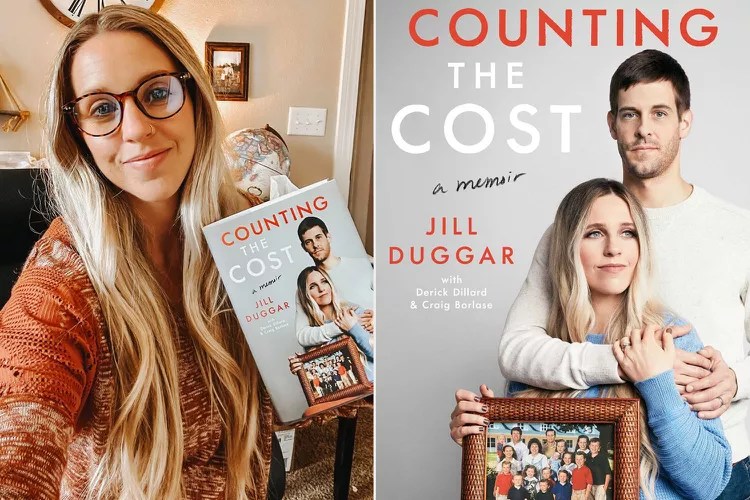
I read Jill Duggar’s memoir Counting The Cost in one sitting on the night of its release, feeling especially interested to hear from her after watching her interviews in Shiny Happy People, an IBLP– and Duggar-Centric docuseries that aired earlier this year. I’ve followed the lives of Jill’s family for many years, growing up in a community that desperately wanted to be just like the Duggars, and then as an adult, paying attention whenever their shit hit the fan. As a “TV Family”—as Jill called it—airing their lives on the screen meant inadvertently airing out their dirty laundry at the same time.
Since I left IBLP a decade ago, I’ve known that there were issues in the Duggar family, not just because we grew up in the same religious cult, but because of the extreme lifestyle they promoted on TV that was even too conservative for my family. And how was this family so buttoned up all the time? And wasn’t anybody concerned about the impact that having your entire life shown on TLC and being chased around by paparazzi and criticized on Duggar-Snarking sites would have on the kids?
I thought we might get the tea from Jinger when she published Becoming Free Indeed at the beginning of this year, but we came up empty. Jill’s memoir is different; she isn’t defensive, doesn’t sweep things under the rug in order to protect her family’s reputation, and she won’t look past issues for the sake of “God’s greater good.” She’s just honest, and her say-it-how-it-is approach to telling her story immediately drew me in.
Jill starts out her memoir with a story of a wintery afternoon during the time that she and Derick were courting. They are at the “Big House” that the Duggars built at the beginning of their show and still live in now, enjoying the snow slopes on the property. Jill and Derick are riding together on the same sled, behaving, Jill notes, like any twentysomething couple just weeks away from getting engaged would, when mother Michelle calls out, “Hey, no boys and girls on the same sled!” (Duggar 2).
Jill jumps off the sled and Derick looks around at Jill’s younger siblings, wondering who Michelle is talking to. But he sees no other boys and girls sledding together, and realizes that Michelle must be talking to him. Him, a man in a serious relationship with a woman who everybody knows he’s going to marry. His reaction is apologetic but bewildered, and while Jill brushes it off by saying that she should have known better, she tells us that’s about to change. “Soon, the bewilderment would be mine” (Duggar 3).
Chapter 1 launches right into childhood, discussing how Jill’s parents controlled their children’s access to music. She said that sometimes the music played was of a violin and piano, and other times a rousing chorus of voices. “On the rarest occasions we might hear drums, but only if they accompanied a marching band” (Duggar 5). If you grew up in IBLP you’d know of its staunch rejection of rock music and the use of any kind of drum, pointing to fringe studies done on rats and with plants showing that listening to drums made you dumber, and was probably demonic, so best just to stay away. I found it so interesting how Jill described her parents use of music as a means of control, as this wasn’t my own experience. I don’t know that my parents ever would have thought to use music as a “tool” like that. As an adult who always has a podcast, an audiobook, or music in the background to feed my ever-hungry ears, I can imagine how motivating it must have been to behave for the reward of music replacing life’s noise for a moment.
In the Duggar family dancing was prohibited, with exceptions only for little children who would “jump for joy” while still too young to understand that dancing brought attention to parts of your body that could be construed as provocative. If anyone danced, the music was shut off.
Jill tells us that she became “the best approval hunter in the whole family,” seeking nods of appreciation and words of praise for her good behavior with great effort (Duggar 8). As the second oldest daughter, she wanted to stand out as the most mature and good, and she took it to heart when her father, Jim-Bob would comment to other people that she was the daughter who was most like her mom.
She says that Jim-Bob was someone she’d looked up to her whole life, and one-on-one time with him was highly coveted; by the time she was nine years old, she had eleven siblings. I just cannot imagine what having so many children put Michelle’s poor uterus through! And gosh, how did she raise so many goddamn kids? The answer is: she had her daughters do it for her.
Jill was delighted when her parents introduced the Buddy System, which made Jill the sister-mom of several younger siblings. It became her permanent job to help her assigned siblings eat, dress, bathe, and buckle-up anytime they rode in their van. She says that she felt happy and honored that her mother entrusted her with her precious babies.
Then we are introduced to the Duggar Family’s standards of modesty. The Duggar girls wore homemade pantaloons under their dresses to keep them modest while they played as little children. The Duggar dress code for older girls is dresses and skirts, with nothing form-fitting or revealing involved. We are shown a picture of the Duggar family’s first trip to the beach, in their matching shirts and dresses with the pilgrim collars on the girls that Michelle surely must have made herself. They went to the quietest part of the beach and still had to avert their eyes to avoid seeing people wearing swimsuits. In an effort to teach the kids about modesty while also admonishing them not to judge others, Michelle admitted once, “When I was younger, before I was a Christian, I used to mow my lawn in a bikini. I really didn’t know any better” (Duggar 31). This story gave me some appreciation for that transparency; when the goal is to appear buttoned-up all of the time, for Michelle to be so vulnerable with her kids in this way is admirable.
“Nike!” is the family’s code word for “Look at the ground! There’s someone dressed immodestly around!” and uttering it will get an instant reaction from everyone in the family, eyes to their toes.
Jill writes that she was aware that her family was different from the rest of the world, and that attending Bill Gothard‘s annual homeschool conference when she was young was the first time she felt normal. The other families there were just like hers! She describes the conferences teachings, especially noting their adamant teachings that “children are a blessing from the Lord!”, that “Music can be a tool of the devil!”, and that “modesty is vital” to the morality and well-being of everyone around you (Duggar 23). She was struck by the Model Families in IBLP and felt like her family were chaos in comparison. Of course, in the years to come, the Duggars would become an IBLP Model Family too, as they were to my family.
Around the time that they joined IBLP, Jim-Bob was also getting into politics, and he successfully ran for state legislature in 1998. Because Jim-Bob spent months at the capital whenever legislature was in session, it was especially handy that Michelle homeschooled the kids so they could travel with him. Jill tells us of her brother Josh’s fascination with his dad’s work, dressing up in a suit and tie for each occasion he could visit Pops. When the other kids would go too, she writes that “We’d watchin him swagger beside Pops, a twelve-year-old politician in the making. …They called him the ‘Little Governor’” (Duggar 29).
For those who may not know, Josh Duggar molested some of his sisters—including Jill—when she and her sisters were young, a traumatic event for each girl involved that heavily impacted the family. They never intended for the incident to become public knowledge, but its emergence years later was a painful event that marked the beginning of Josh’s public demise.
Of the many problematic lessons and rules the kids were subject to, one that caused a lot of problems was the warning to not “stir up contention among the brethren,” which Jill wrote about saying, “It was a way for our parents to keep us siblings from talking badly about each other, or putting anyone down, but over time it became something else—something more sinister. By preventing us from discussing anything controversial or sensitive with each other, the instruction not to ‘stir up contention among the brethren’ became a tool for silence, for control, for guilt.” This is like your boss asking you and all of your coworkers to never discuss your salary with one another, claiming it’s to avoid conflict, when in reality, keeping everyone in the dark about how much everyone else is paid helps your boss keep your salary lower. Except, despite 19 Kids and Counting quickly rising in popularity, Jim-Bob wasn’t paying any of his kids to be on the show. Oh wait! We’re not even there yet.
Jill tells us in chapter 2 that her family has always been involved in her father’s endeavors, whether it was building their house or helping dad’s campaign for state representative. He ran against the incumbent for the republican nomination to the US senate, and told his kids, “I really feel like God wants me to do this. I’ve prayed about it and have done something that I only do for the most important decisions ever” (Duggar 36).
“What, Pops?”
“I flipped a coin three times,” he said, “and all three times it landed on heads. So I said, ‘Okay, God, you want me to run, so I will run” (Duggar 37).
First of all, I think that basing a decision on a coin flip is suspiciously woo-woo coming from someone with such a conservative stick up his ass; this really showcases how Christians just do whatever they want and give it a Christian label so that it fits their narrative. Second of all, deciding that a coin landing on a certain side is the medium through which God will participate in answering your specific question is an extremely self-centered way to put your all-powerful God in a box and make him do what you want. It’s…probably not how that works. For the Duggar kids’ takeaway from that lesson from Pops to be that he does things like run for senate at the whim of a coin flip and call it spiritual is just…disappointing. Even a little concerning?
Anyway, Jim-Bob considered his participation in politics to be his ministry, and when you’re a Model Family in IBLP, your dad’s ministry is the whole family’s ministry. This is because the power-structure in IBLP teaching is that dad is the head of the household who submits solely to God, while his entire family submits to him. When you really believe that about yourself and your family believes that too, everybody has the potential to get into a lot of trouble.
Jim-Bob lost the senate race, and Jill describes herself and several siblings feeling relieved to not move to DC for the duration of his term. But shortly after this, Jim-Bob proposed another family ministry to his kids, which he described as “a window of opportunity” that was surely the orchestration of God. This opportunity came with cameras, a film crew, and money. Jill wrote, “‘a window of opportunity’ became part of our family shorthand. It was an instant explanation of the reasons why certain choices were made, a reminder of the blessings received and the sacrifices that all of us must make in return. But with every passing season and every change that would follow, the meaning of those five words would alter. In time, whenever I would hear anyone talk about how that first decision to bring the TV cameras into our home was a window of opportunity, all I would think about was secrets and lies” (Duggar 39).
But “it wasn’t all bad,” she continues (Duggar 40). It turns out that whatever the Duggars did while a camera was rolling was paid for by TLC, and this meant that grocery shopping for their family of 14 would for once not fill the week ahead with “tater tot casserole or bean sandwiches” (Duggar 40). Yikes. Okay, so then the kids learn from a young age, “We love filming our lives, because now we can actually afford food.” A+ parenting JB! Good thing you now can afford to keep knocking your wife up!
And he did. They aired their growing family on TLC, filming through the pregnancies and births of half a dozen subsequent kids, bringing in enough money from the show to build a bigger house, since their two bedroom three bathroom home just wasn’t cutting it anymore. Jill says Jim-Bob worked out some kind of agreement with the show to have a significant portion of their new house paid for, and like every endeavor of Jim-Bob’s, his kids became his building crew.
As the show grew, so did the number of opportunities given to them. The Duggar’s became more publicly associated with IBLP and hosted Bill Gothard and some staff from his training center over for lunch, where Jill met Bill for the first time in person. Jill explains that Bill’s preference for pretty blonde girls was so well-known amongst those who knew him that his type was famously called “Gothard Girls,” and Jill admitted to joking around with her sisters that Jana—the only blonde of the older Duggar sisters—was a Gothard Girl. Somehow, “it didn’t occur to me at all how strange, unsafe, and unwise it was. And if I had, I doubt I would have been able to speak out against it” (Duggar 50).
Then Jill tells drops the bomb: the Department of Homeland Security was investigating her family. Imagine this: Josh was courting a girl, he confessed his sexual abuse of his sisters to her, and after ending their courtship, she wrote a letter to him expressing her anger, and instead of sending it to him, she put it in a book. “Four years later,” Jill writes, “the book was loaned to a friend at church and the letter resurfaced. It was read by someone who attended the same church as us. Instead of talking with Mom or Pops, she got more information from church leadership, phoned a hotline, and informed HSP about what she thought was potentially an abusive situation” (Duggar 52).
“Pops received a call notifying him of the investigation, and myself, most of my sisters, and my parents all had to be interviewed. We attended a closed-court session. People—strangers—would come to our house at random times to make sure there were locks on the doors and that everybody was sleeping where they were supposed to be sleeping. It was terrifying” (Duggar 52).
This situation was immensely anxiety-inducing for Jill, as she feared that saying one wrong thing could cause the government to take her and her siblings away from her parents. In the end, the story of what Josh had done rippled throughout their church and created sides, later causing it to split.
“When it was over, all I wanted to do was put it behind me. I had been terrified of losing my family and traumatized by the questions I had been forced to answer. I wanted to forget all about it. I wanted to move on front the whole thing—as fast and far away as possible” (Duggar 54).
To Be Continued
Duggar, Jill, et al. Counting the Cost. Gallery Books, an Imprint of Simon & Shuster, 2023.
-
How I Recovered My Life After Growing Up In A Cult

If you believe that you are in a cult and need help getting out, here are some resources that may help you. If you are in physical danger, call 911.
Support Network ~ Am I In A Cult? ~ Grow Up Fundamentalist?
“Oh my god,” I whispered to my dark room. “I was raised in a cult.”
I’d spent hours that day tumbling down an internet rabbit-hole of articles, stories, and blogposts that described my life. Everything I read was saying, What’s happening to you is wrong…your feelings are valid…you don’t have to live this way…there is hope.
As I read, I felt two separate parts of me emerge and begin fighting; one part seemed to grab at any evidence that validated my feelings of oppression. It was relieved, telling me, “See? You feel depressed, anxious, and suicidal because you’re being mistreated. What’s wrong is your environment, NOT you.” The other part felt attacked, and was clinging tightly to the beliefs and ideas that made up the foundations of my life. It worried to me, “What if what you’re reading is wrong? What if you stop believing and go to Hell?”
When I crawled out of my rabbit-hole it was dark outside; I’d been frozen staring at my screen all afternoon long. I felt dread. I felt relief. I felt panic. I felt exhaustion. Here I was: 18, a few months away from graduation, with all of my proverbial eggs in one basket. I’d been homeschooled 1st-12th grade and had very little to show for it. My understanding of politics, justice, religion, science, the nature of humanity, and my plans for my future were all viewed through the lens of conservative Christian fundamentalism. I’d been preparing for the Rapture and End Times my whole life. If humanity even lasted to my adulthood, my understanding of God’s plan for me was to marry a nice Christian man and be a stay-at-home mother to however many children God gave us. I shouldn’t go to college, and pursuing a career was God’s calling for my brothers, not me.
Suffice it to say that realizing NOW–on the brink of adulthood–that the life I’d led up to this point was not based in reality was devastating. Start over? Now? That seemed so hard. Wasn’t there a chance that what I’d read was wrong? For the 18 years I’d spent basing my worldview on Bill Gothard’s version of reality to not be a complete waste of my life would have been a relief.
Staying certainly would have been the easier choice. But that rabbit-hole started a spark of hope in me that continued to burn and burn as I began to look at my life and consider my options.
Ten years later, and I didn’t stay. I am a self-employed woman with a tattoo, a nostril piercing, and a Lexapro prescription. I listen to secular music–even with drums!–and I drink wine. Sometimes I say “fuck.” I wear yoga pants and a sports bra to the gym, and if anyone checks me out I think “you’re welcome” instead of “I’m sorry.” I don’t do anything that I don’t want to do in this life, and I’m not afraid of going to Hell when I die. If my 18-year-old self could see me now, I think she’d be a little afraid, but mostly she’d sigh with relief, “I’m so glad we made it out,” and realize, “holy shit, we’re happy.”
And I am.
Ten years ago I didn’t know where I’d end up, and I definitely didn’t have a road-map on how to get here. It’s really true that none of us turn 18 or 21 or 25 or 30 or whatever your magic number is for when you think adults suddenly know what they’re doing–we don’t, and there is no arrival point. We’re all just making it up as we go, and so were your parents. So here is your permission to throw out your preconceived notions of what adulthood is that festered and fed off of those childhood because-I-said-so‘s and someday-you’ll-understand-and-say-you’re-sorry‘s.
For when I was feeling so stranded and broken, this is the guide I wish that I’d had. Take my hand. It’s going to be okay.
1. Take a Deep Breath
You may not feel okay right now but eventually you will be. Realizing that the religious organization you grew up in is a cult is a big deal, and if you feel as though the wind has been knocked out of your lungs, that’s a sign that you understand the gravity of your situation. It is a loss of your time that you cannot get back…you only grow up once. I felt robbed of my childhood. Mourning the life you can’t get back is part of your path toward a healthier future. Give yourself grace. Please don’t call yourself a piece of shit, and don’t you dare think you’d be better off dead because that’s absolutely not true. You belong here and you deserve to take up space.
2. Take Stock of Your Life
Consider your circumstances objectively. What do you have going for you? What kind of job would you recommend to someone with your level of education, experience, and skills? Do you currently have a job, or could you get one to start making your own money? How much money do you have saved? What are your current monthly expenses and do you have any debt? Do you have a mode of transportation? Access to the internet? Do you have a drivers license or other form of government ID, your birth certificate, and your Social Security card handy? What are your current responsibilities? Are you married, a parent, or do you have a pet? Consider what is keeping you where you are right now.
3. Prioritize Your Safety
The most important thing is your safety. When I realized I was in a cult, I knew I wasn’t in physical danger, but I faced manipulation and psychological and spiritual abuse daily from my parents. It was something I had to weather until I could move out, which didn’t end up being for years. However, my acknowledgement that what was happening to me was abuse empowered me to begin building an identity outside of who my parents said I was. If you are in danger, there ARE resources to help you. If physical or domestic violence describes your situation, call the domestic abuse hotline (800-799-7233) or 911. If you are a minor experiencing abuse, call Child Protective Services (800-422-4453). If you are an adult trapped in your environment against your will and you want to leave, call 911.
4. Acknowledge Your Roadblocks and Enemies
When I realized I was in a cult it was my senior year of high school, I had a very part-time job, and I didn’t yet have a car or a drivers license. There was a boy I wanted to date (my husband these days) but knew that my parents would be most tolerant of that decision if I graduated first, so I was waiting. I wanted to move out, but felt that there were so many stepping stones between where I was and the proverbial shore that was living on my own. I needed to get my ducks in line to begin overcoming these roadblocks. It felt grim to acknowledge that my main enemies were the cult itself and my parents who held me to the cult’s standards, but that acknowledgement clarified what my exit strategy should be. I chose to steel myself in anticipation of the triggers I would endure and quietly bide my time. I chose carefully who to discuss my situation with, first identifying who my allies were. Who would help me get out, and who would try to convince me to stay? Also…what was I most afraid of? I realized that I lived in fear of what God would do to me if I sinned or died unrepentant. My fear of God and going to Hell remained a roadblock for me that took years to overcome.
5. Educate Yourself
Once I admitted to myself that I was in a cult, several things immediately changed. Suddenly my environment triggered me. All of the religious books and media around my family’s house and on my own bookshelf were symbols of my indoctrination and religious programming. Things my parents said to me felt traumatizing because for the first time I was aware that I was actively being abused by my parents. I began second-guessing every single thing I’ve grown up thinking or believing. Because my religion had it’s own systematic beliefs regarding any topic (politics, science, gender-roles, morality, education, etc.,) I felt that I had to wipe my understanding of the world completely clean and start over. I felt like I didn’t know who to trust, and often questioned my own judgment.
I began to google everything I was unsure of. I had a friend who was getting out of the same cult with me, so we became each other’s sounding boards as we began educating ourselves. What DID I think of politics? What DID I think about heaven and hell and God? Did I believe in evolution or a young earth? What did I think about abortion? Birth-control? Alcohol? I began asking other people what they believed. If they asked me for my opinion on the topic, I would say, “I don’t know, I’m still learning about it.” I read SO many self-help books. Having access to the library was great, but I was also trying to keep my religious deconstruction a secret from my parents, so listening to audiobooks on my phone with apps like Audible or Libby were key for me.
Having the attitude that it’s okay to not have all the answers is immensely helpful. It’s okay to take time to develop your opinions and regain trust of your own intuition. Don’t question whether your thoughts are from the devil–they’re not. That’s YOU in there, trying to think freely! Trust this voice. And if you feel overwhelmed by the many, many viewpoints out there on everything, give yourself time for the information-overload dust to settle and keep searching. Overtime the voices will get organized and a couple will stand out to you. Latch onto these; these are your thoughts forming in you. Be patient–it’ll take years to rebuild your worldview with the same clarity that you had before, but it’s not a race. Saying “I don’t know” about a topic that you’ve previously felt certain about can feel destabilizing, but your life won’t crumble while your opinions are unformed. Lean into your uncertainty.
Take heart–we are all tiny beings existing on a rock flying through space. Give yourself permission for your decisions and actions not to matter so much. You have time and space to collect yourself and then to just exist. You don’t need to worry about the end of the world anymore.
6. Stop Consuming Indoctrinating Media
One of my triggers was my mom talking to me about the news. She read the news everyday and had email subscriptions to a lot of alternative news sources, many of which she continued to forward to me for years after moving out.
I stopped watching or reading the news altogether. It was too stressful to worry about how every news story might be a biblical prophesy coming true and shortening the distance between now and the End Times. I unfollowed people on my social media feed who ignited my fear that I might be going to hell. I stopped reading the books sold by the cult and threw away a lot of the ones on my bookshelf, replacing it all with resources whose openminded viewpoints interested me.
7. Set Some Goals
Envision your ideal self in ten years sans cult. Where are you living? Do you have a family of your own? What kind of job do you see yourself working? Now consider how to get onto the path to that future self. Do you need to get a (different) job? Find a way to move out? Start seeing a therapist? What are the top three changes to your life that would improve it the most?
8. Begin Building a Support Network
No one is self-made. We all rely on other people to support us throughout our journeys. You need people in your circle who will help you when you’re in a crisis. In a perfect world that would be your family, but often in these situations it is our families who are hurting us the most. In my situation the majority of my community were people like my parents who would treat me as an outlier if they knew that I disagreed with their beliefs and lifestyle. Determine who your current allies are and who you should be wary of.
If you don’t have people in your corner, it’s time to go get some! Consider the following ways to meet new people and begin building your Chosen Family:
- Take a class at a community center or community college
- Meet your neighbors at a block party, your local swimming pool, etc.
- Volunteer for a cause that matters to you
- Attend a (different, less-restrictive) church (I currently attend a United Church of Christ)
- Attend a club (MeetUp.com is great for this!)
- Get a part-time job at a place where you think you’d connect with others
- Frequent the library, a park, a coffee shop, a beach, or a bar to meet the other regulars
- Get on a friend-finding app like Bumble BFF
- Pursue a hobby that involves other people (go skating at a skate park, take a pottery class, take your dog to the dog park, or attend an art gallery)
- Attend local events, like the farmers market, the fair, etc.
The caveat to this is that you’ll need to put yourself out there. If you’ve grown up with the same people your whole life and risk losing everyone by leaving, don’t listen to the fear that you’ll never have the same kind of community again. People reinvent themselves all the time, everyday. It’s possible to move to a new place knowing no one and starting over with everything. I’ve done it; it’s actually really empowering and provides so many natural opportunities for growth. You can rebuild your whole life with time, intention, and effort.
9. Work Toward Financial Independence
Find a way to get a job. Save your money as much as you can, work on building your credit, and work on separating your finances and assets (a car, for instance) from those in power over you by getting a separate bank account, storing money there as opposed to cash (if at risk of being stolen), putting your car and insurance in your own name if you can, etc.
10. Hide Your Stuff
If your things get rifled through by others who don’t respect your privacy, do everything you can to password-protect all of your technology, and be smart about where you collect and store information. If you have a journal, hide it in a really good spot and don’t write anything else in it. Start journaling in a word document on a password-protected device instead. Your privacy will be key to your plan to leave, so don’t sabotage your efforts. I stored things in the trunk of my car that could only be opened with a key, and I had a locker at my community college where I stored things I couldn’t risk my parents finding in my room. I developed a habit of shredding all of my documents before throwing them away, and bigger items were discarded in public trash cans (as opposed to toilets–don’t do that!) You deserve privacy and have a right to your belongings. If you can safely do so, stand up for yourself and your human needs.
11. Start Healing Yourself
No one can heal you but you.
First, take care of your physical body. Love your body with what you put into it. Nourish yourself. Be careful with substances, and be intentional when you do use substances like alcohol or weed.
When we undergo repetitive trauma, it wears on our bodies as much as our hearts. If you only recently realized you are in a cult, you may experience shock, then exhaustion. You will likely be emotionally all over the place, and may begin to experience panic attacks or intense anxiety. These symptoms are common and you may just need to ride it out. It gets better.
You may also need medical attention. If you have health insurance, set up a check-up appointment with a doctor and catch up on your vaccines if needed. I grew up in an anti-vax household, so I had a dozen or so vaccines that I caught up on over time. You may also want to consider starting a form of birth-control.
Second, you need therapy. If you have health insurance and can afford the co-pay, or if you can afford an online service like Brightside or Nurx, DO pursue therapy. Church counseling won’t cut it, and be wary of subjecting yourself to family therapy sessions–especially if the counselor is not a licensed therapist. If your cult has been harming you, they aren’t likely to begin helping now. Seek professional care.
Third, medication can help you cope with mental health conditions. Common ones for people getting out of a cult are anxiety, depression, and PTDS. You may also have other unrelated mental health conditions that have gone undiagnosed due to your circumstances. Medications can help treat conditions like ADHD and Bipolar to make daily life easier.
Start moving your body if you don’t already regularly exercise. Some people find running to be therapeutic and an outlet for processing experiences (I am not those people). Others find yoga and meditation to be peaceful and sometimes spiritual (without all the trauma). Get into a sport! Find a way of moving that feels good to your body.
12. Dream About Your Future
I know it’s hard to imagine right now, but there is a great big world out here and I want you to see it. There is a life for you that is stable, where you are not constantly in fear of being harmed, in crisis over paying your bills, or feeling worthless or better off dead. Where you have love and support from friends and have the mental and emotional capacity to love yourself and enjoy your life. Focus on this potential life and how you’re growing toward it.
13. Be Patient With Yourself
This growth takes time. You may struggle with cognitive dissonance–knowing that God will not smite you if you stop believing, but still fearing that he might. You will get triggered by things that take you by surprise and need time to process what is happening. Remember, you are actively deprogramming your brain from the brainwashing you experienced as a child, so you’ll need to repeatedly reframe your thoughts and feelings. You may deconstruct your faith, or at least detangle the rest of your worldview from it, and decide what to keep and leave behind. All of these things take time and work, and it’s normal to feel physically drained from it all.
14. Redistribute Your Power
You are worthy of love and belonging simply because you exist. You deserve a life free of limitations on your thoughts and beliefs. It may take years to get to a place where you are living in a place that you love, and where you have freedom and full power over your life. One thing you can start working toward now is establishing boundaries with the people in your life who have crossed your boundaries in the past.
Consider how they have done this, and what your response to it was. Were you passive? Did you protest and get ignored? Did you run away crying to your childhood bedroom because you had no other choice? You’re probably older now, and you may not even live with your parents anymore. It took me years after moving out to identify that my response to my parents assertion of power over me never changed after my childhood. Now, as an adult, if my parents make me uncomfortable, I don’t have to tolerate their behavior, I can just get in my car and leave! But it usually doesn’t come to that; over the past decade I’ve had to create boundaries and practice enforcing them. It’s important to communicate to those interacting with you what you are comfortable with. People may challenge your boundaries by pushing back, and you will need to reiterate your boundaries again and again. Think about it like you’re training a pet to do a trick–learning takes time and repetition, and change is hard for people, but remaining firm with your boundaries will help cement them into peoples’ minds over time.
Also consider inoculating family and friends with small doses of the change happening in you. Feed them information within friendly conversation to normalize whatever lifestyle changes have occurred. I knew that the only way my parents would learn to accept me would be through slowly introducing my real thoughts and choices to them over time, giving them opportunities to process and respond. While it was not my responsibility to be the teacher in this situation, I chose to assume that role in order to teach my parents how to accept people who don’t live like them.
And that’s it! Follow these 14 steps and your life will be fixed!
Just kidding.
That’s not how life works. Healing is not linear, and these fourteen steps are just steps that I made up and put in an order that makes senses to me but may feel out of order for you. Only you know how best to begin healing yourself, so listen to your thoughts and feelings and give them weight! What you think and want matters, YOU matter, you have a place here on this spinning rock with us, and none of those facts hinge on anything that anyone can say about you.
Here’s what I like to remind myself: I am not responsible for other people’s feelings, even when they are about me.
And also this: what other people say about me is none of my business.
And this too: people who talk are gonna talk about me no matter what, so I might as well give them something interesting to talk about.
It will be okay. You will be okay.
Say it with me: I am a survivor and I will overcome this.
-
Why I Left IBLP, Part 3

My mom and I showed up at the Pre-Excel room and asked for a meeting with Sara, Rachel and Emily. They agreed to sit down with us behind the stage curtain, and this time my mom did the talking.
“Leona told me what happened, and she does not have an eating disorder. I’m her mother. I would know.” Mom pointed at my coffee cup, “she’s even drinking a vanilla latte.”
I nodded and sipped my coffee as proof.
My mom argued against each of their points and stated at the end, “I don’t believe you have the authority to kick her out.”
Sara, Rachel and Emily listened respectfully, but when it was their turn to talk, Sara piped up, “Well actually, we did get confirmation from the leaders above us and they approved our decision to tell Leona to attend the Student Sessions instead.” She looked at me suspiciously, “did you attend it?” fully expecting me to have played hooky.
“I did,” I said solemnly.
“But your reasons for kicking her out aren’t true,” my mom protested.
Sara looked at Rachel and Emily, as if reminding my mom and I that they both supported her. “Well, we still feel that Leona has a rebellious spirit, and we do feel after praying about this in earnest that this is what God has asked us to do.”
Then my mom faced the same issue I had. How do you argue with someone who says that God told them to do or say whatever it is they’d done or said? How can you contradict them without coming across as a rebellious mom with her rebellious daughter?
“But,” Emily conceded, “Leona can join her group for the performance at the end of the day.”
“Yes,” Rachel agreed, “she can come back at 3:30PM to join Mary to lead the girls to the parent session for their performance, then be here as the girls get picked up and help clean up the room at the end of the conference.” But that was their final offer. There were no apologies for their accusations. I wondered if Rachel looked my mom up and down and suspected she and her child-size cardigan had an eating disorder too.
We walked out of the room and my mom huffed. “That’s just not right.”
“I know,” I groaned, still reveling in having her on my side. “But what can we do?”
We happened past Chris Hogan, who was a friend to my parents, and who ran a ministry endorsed by ATI. Bill Gothard knew him personally, and Chris spoke frequently at the conferences.
“Hi Chris,” my mom stopped him as he was waving but still walking past, “can we talk to you about a situation for a minute?” Chris was happy to stop and listen, and when I mentioned the eating disorder accusation, he said with feeling, “That’s just not okay for them to say. My daughter has allergies and she can’t eat the ATI meals either. I’m so sorry that happened to you.” He paused, thinking of something to do to correct the situation. “Have you talked to anyone else? Do you think you could get a meeting with Mr. Gothard? Maybe you could find David” –who was what we called an MGA (Mr. Gothard’s Assistant)— “and ask him to pull Bill aside?”
This was a hopeful development! “What a good idea!” My mom told Chris, and “Thank you!” we repeated as we then began to wonder where to find David.
We found him outside of the Student Sessions room, and he agreed to pull Mr. Gothard aside for me. It helped that David knew me from when I volunteered at IBLP headquarters years ago, and just yesterday he’d been the one to hook up my lapel mic for my speech. Oh, how things change.
Close to noon, I was sitting across from Mr. Gothard in one of the main areas of the conference building.
“It’s good to see you again, Leona,” Bill said to me sweetly. “Your eyes are so bright and full of the holy spirit. When are you coming back to Headquarters?”
“Thank you! I’d love to come back sometime after I graduate high school,” I offered, which was true.
“Tell me what’s going on?” He asked, so I explained.
After I concluded my story, Bill’s first question to me was, “What kind of music do you listen to? You said you play guitar?”
Feeling exasperated but remaining polite, I answered, “Yes, I have a guitar. I play the guitar in my youth group band sometimes. And I sing.”
“What kinds of music do you play?”
“Well, we play church music….And hymns,” I threw it in there, hoping it would make a difference, even though we mostly played the kind of music you hear on K-Love.
“You know,” Bill went into his whole monologue on the risks of listening to any music with a backbeat, whether it was worship music played in church or not.
I listened intently, not hearing anything I hadn’t heard many times before, then I tried to bring us back to the issue at hand. “So…what I want is to go back to Pre-Excel for the rest of the day. Can you help me do that?”
He thought for a minute. “When I went to college…” he started, and shot into another longwinded story about how a PhD project got rejected when he was in college due to his faith in God and he felt persecuted. “Sometimes in life, we experience persecution, even when we do nothing wrong, but God works it out for our good, and we experience His outpouring of blessings. Leona, I think in this instance you are being persecuted; but remember, God blesses those who are persecuted, and He will grow you as a person because of it.” He smiled at me in conclusion.
And that was that. I took my problem all the way up to the top leadership of the organization that put on the conference, and while he agreed I was being unfairly treated, and while he had all the power he needed to make it right by telling Sara, Rachel and Emily
to go suck itto let me back into Pre-Excel to finish the conference, he didn’t do that. He told me that I would grow as a person from this wrongdoing.Completely baffled and hurt, I cried again, this time in the fancy sitting room attached to the lady’s bathroom upstairs. I couldn’t help it. It blew my mind that a man who had the power to–with a few words–correct a complete injustice chose not to. Did he not care enough? Did he think I deserved it? ATI was God’s way of living, and I’d spent the last ten years of my life living by the standards they taught me. Then, like the flip of a light switch, they turned against me, unwilling even to understand my point of view.
Mid-afternoon, my mom was over the situation and treated me with impatience. “This is just the way it is. It’s okay. You’ve gotta wipe your tears and get over it.”
Ah, now this was the mom I knew. She had to come back sooner or later.
I attended the adult sessions for the rest of the day, because I just couldn’t bear to be a navy-blue polo in a sea of white anymore. Then, when it was time, I finished out the conference with my girls, grateful to be back with them, but still heartbroken that my situation hadn’t been significant enough to correct.
I was still a mess on the drive home the next day. By then, mom was completely over me.
“Don’t tell anyone about this situation,” she warned. “We wouldn’t want this story to give anyone the wrong impression of ATI.”
It was like a knife through my heart. Not only was this injustice not important enough for Mr. Gothard to correct on my behalf, but expressing my pain from this situation to friends who could support me was not nearly as important as protecting ATI’s reputation.
I wasn’t the same person for weeks, feeling gutted, rejected, and numb all at once. Mysteriously, almost as soon as we returned home from the conference, my health issues disappeared. If there is a God who cares about me, I wonder from time to time if this was an act on their part to help me get out of IBLP.
I did tell some people about my situation anyway. I couldn’t find it in me to care if my story hurt ATI’s reputation–they had hurt ME. Shouldn’t people be aware that things like this could happen? Without realizing it, I began to take IBLP’s teachings with a grain of salt.
Time passed and Bill Gothard’s sexual scandals hit the news. People were beginning to talk about it. On a day I’ll never forget, I scrolled past an article reposted on Facebook suggesting that we’d misinterpreted Proverbs’ lessons on guarding our hearts. Curious, I clicked the link and plunged down a rabbit hole that I didn’t crawl out of for hours. Each article was rich with hyperlinks to other posts on Recovering Grace‘s site, and each article tugged at the threads of my belief system that began rapidly unravelling.
I read about Bill Gothard’s sexual scandals, dating back to the 80s, from young women who spent time at headquarters just like I did. I realized that it had been a mere stroke of luck that I wasn’t also one of them. I read about other people who had been hurt by IBLP, and read stories and theological arguments about how IBLP’s teachings are harmful, Biblically inaccurate, and often leading to abusive parenting.
It was like learning the words to describe feelings that I didn’t know anyone else had. These stories validated the thoughts and feelings I felt guilty for having and reassured me that I wasn’t alone. In a moment of immense relief mixed with hellish dread, I whispered to my empty room, now dark with the passing of so many hours glued to my desk, “Oh my god, I was raised in a cult.”
There is no taking back that realization, even if you want to. I debated with myself whether I would just ignore what I’d learned that day and choose the path of least resistance–carrying on with my life, safe within my limited worldview and loved by my family and community. It would have been the easier choice.
But there was this tiny spark of hope in me that kept prodding, “But doesn’t this mean that there is more to life than this? Maybe life isn’t supposed to be this hard.”
And it was hard. Everything about my life was controlled, monitored, and filled with fear of slipping up. Don’t sin! What if God raptures us during a moment when you haven’t gotten right with God? You’ll be left behind.
And sin was almost everything: thinking too much about yourself, loving anything or anyone in your life more than God, complaining, having a bad attitude, telling the smallest lie, being too interested in your own body, overeating, oversleeping, wearing anything too revealing, saying any bad words, watching anything that promoted living a worldly life, listening to worldly music–especially music with a backbeat in it, being close friends with the opposite gender, kissing before your wedding day, holding hands before you were engaged… The standards were impossibly high, always giving you a reason to apologize to God and remember why you needed His grace. Always making you feel like a broken, horrible person; your disgust with humanity cornered you into hating your body and turning against yourself. Earth was our waiting room while we longed for Jesus to return and bring us to Heaven. Until then, it was our lot to suffer in our human vessels on a planet that our earliest ancestors had chosen to invite sin onto.
I tried to imagine a life where I could be in tune with myself without it being a sin. I could focus on self-care without worrying that I was self-obsessed. I could be friends with people I was genuinely interested in without worrying that I was becoming worldly or accidentally giving away pieces of my heart that I should save for my future husband. I could pursue hobbies without fearing that I was putting my interests before God. I could pursue education and a career without believing that I was breaking God’s rules about what my role as a woman was. I could have a job that didn’t directly impact God’s kingdom without believing that I had become a heathen who didn’t care about saving souls. I just could be who I wanted to be.
I tried to imagine such peace and couldn’t do so without strong suspicions that such an existence was against God’s will.
And yet… What I was reading about IBLP’s take on the Bible being wrong was so relieving. You’re telling me that maybe I can go to Heaven AND enjoy a peaceful life on earth in the meantime? You’re telling me that God wants me to be happy? It seemed too good to be true. Actually, it took years to really believe that God wanted me to be happy, but I took the plunge anyway.
I left the cult. That is to say, I left it in my heart, and began to unpack my beliefs and slowly, painstakingly replace them with new ones. Once I graduated high school later that year, I told my parents that I didn’t want to be involved anymore, and was surprised and relieved when they didn’t disown me. I don’t mean to make it sound easy–it wasn’t. It was painful and isolating and I’m still rewiring my brain ten years later. Being steeped in a cult for so long gets into the cracks of your very core, and I know that it will impact me for the rest of my life.
But! I’m also okay. I’m happy. I live a good life, married to a good partner. I’ve gotten more education and have a great career and good friends. I’m still connected with my family, and I am working on growing my chosen family too.
If my story sounds like yours, I just want you to know that there is hope. Don’t give up, and don’t choose the path of least resistance and stay where you are. Get out! Seriously, GET OUT.
There is so much world out here and it’s beautiful. It will be very hard, but it’s worth it. I promise.
Header Photo Credit: James Staddon
-
Why I Left IBLP, Part 2

Read Part 1 here.
I’m a drama-girlie. I was homeschooled so I didn’t have a chance to do theater, but I did do a lot of interpretive speeches in high school, which was as close as I could get to being a theater kid. The little skits that the Pre-Excel leaders and sometimes some of us group leaders got to participate in were one of my favorite parts of Pre-Excel. They were usually short and you would just adlib the script; I liked how whimsical the props and costumes were. I had let Sara know on the first day of Pre-Excel that I was familiar with the usual skits–having gone through four years of Pre-Excel as a girl–and that I would love to be involved. So far I hadn’t been asked to participate, but on the morning of the last day of the conference, when Sara, Rachel and the other leader, Emily, asked me to come speak with them in the back of the room, I got excited. As they led me behind the curtained-up stage, I asked Sara, unable to contain my excitement, “Are you going to put me in one of your skits?”
“No…” Sara said.
“Oh,” I tried to think of some other reason why they’d need to talk to me. I’d completely forgotten last night’s interaction. “Am I in trouble?” I joked, expecting a chuckle and an “of course not!”
“Well…sort of,” Rachel answered, causing my stomach to drop.
“Oh…” It must be a mistake though; all of my girls absolutely loved me, and I didn’t remember breaking any rules. I certainly never intended to.
We sat down behind the stage curtains in a circle of four and Emily started, “Okay, Leona, we are just trying to clear something up so we’d like to ask you a series of questions.”
I fidgeted uncomfortably, aware that I hardly had a choice in the matter. “Um, alright.”
“So, we’ve noticed that you’re on a special diet, and you won’t eat the food that the conference offers,” Rachel began.
“Yeah,” I nodded, “I’m having some health issues with my digestion and I can only really eat fruits and vegetables right now. My mom and I have been trying to figure out what’s going on.”
“Yes, you mentioned that,” Rachel continued, “but with my experience with an eating disorder, I know that wanting to diet and control the foods in our bodies sometimes manifest themselves in unique ways. Have you ever considered that you might have an eating disorder?”
This suggestion seemed crazy to me. Wouldn’t I know if I had an eating disorder? “What?” I almost laughed. “Um, no, I definitely don’t,” I said firmly, feeling as though I were caught in a huge misunderstanding. “I usually eat a lot, it’s just that with my health issues—”
“You know, sometimes people have eating disorders without us believing that we do. It’s a way that Satan attacks us by tricking us into treating our bodies badly, and it can be dangerous. I’m concerned that maybe you have an eating disorder and are in denial that you do.” Rachel nodded with certainty, encouraging me to succumb to her diagnosis.
I sat there in shock, suddenly wondering, Oh my gosh, do I have an eating disorder? I didn’t know if I could trust myself.
“Um, I really don’t think so…” I stared at my fidgeting hands, unsure of what else to do or say. It seemed like they weren’t going to believe anything I said if I disagreed with them.
“Okay, let’s move on,” Sara cut in. “Leona, can you tell us about what kind of music you typically listen to?”
Oh no, I thought, immediately remembering the misunderstanding from the night before. Is that what this is about? “Um, I mean…I listen to like, I don’t know, conventional music?” I wasn’t going to lie, that wasn’t me, but I really didn’t want to say, “I secretly listen to rock music in the privacy of my bedroom against my parents’ wishes” because that would be my ticket to hell, as far as these women seemed to be concerned.
“Like…radio music?” Sara offered, and, relieved that she wasn’t going to force me to admit that I listened to rock music, I agreed, “Yeah, like radio music.”
“Okay,” Sara gave me a quick nod, then looked to Rachel and Emily, as if I had confirmed all their suspicions.
“So last night when I interacted with you, I told you we were only allowed to play hymns here, and then I left, and when I came back with Rachel and asked what you were playing, you and that girl both laughed. It seemed like you hadn’t listened to me and were still playing other music.”
“Oh no, that’s not what happened,” I tried to reassure Sara. “I had been playing my guitar and Maggie was playing Amazing Grace on the piano and our chords didn’t match up so when you came back we laughed because—”
Sara put her hand up to stop me. “I see. That wasn’t what Rachel and I felt happened.”
I blinked. What they felt happened?
“–We prayed about it with Emily,” Sara plunged on, “and we feel that you have a rebellious spirit, and that you need serious help.”
I stared blankly. It wasn’t sinking in what they were trying to tell me.
They didn’t seem to mind my silence. They just kept talking at me. “Because of the spiritual state that we sense you are in, and because of the type of music you listen to, we feel that you are not fit to teach the girls in Pre-Excel. We prayed about it last night, and God told us that you need to attend the Student Sessions for the rest of the conference instead. We talked about it with our authorities and they agree.”
Tears sprang to my eyes as I listened to them talk about me. I felt powerless to contradict anything they told me because they seemed like they’d already made up their minds. And God had told them to do this? It was one thing if He really had; but if He hadn’t, well…there was no way to verify that. And who was I to question their claim? Would they then accuse me of questioning God and tell me that maybe–even if I didn’t know it–I wasn’t really a Christian?
When I didn’t say anything, Rachel asked, “…Do you have any questions?”
“No,” was all I could get out.
“Has anything we’ve told you this morning offended you?” Emily pressed.
What a question! “Yes,” I sniffed, holding back my feelings. I didn’t want to cry in front of these horrible women.
“Oh…” Emily seemed stumped as to why that could be. “Well…do you want to talk about it?”
Did I want to talk about how they had just gutted me? Insulted me? Doubted my word and made me question my judgement of reality? Absolutely not.
“No,” I croaked.
My one-word answers seemed confusing to them. “…No, we didn’t hurt your feelings, or no, you don’t want to talk about it?” Sara asked.
I did my best to steel my expression. “I don’t want to talk about it.”
“Okay, well, before we wrap up, can we pray for you?” It was phrased as a question, but Sara made it a statement.
“Sure,” I whispered, feeling trapped. So, they prayed. They prayed for my rebellious spirit and for the eating disorder that I was in denial of. They prayed for the conflict and hurt feelings I felt that I didn’t want to talk about. They thanked God for speaking His words of wisdom to us. They prayed it would be a life-changing day of learning for me. “Amen,” they said, and “amen” I cry-whispered, and then they stood up and indicated that I should leave.
What I had to do next was clear. I stood up, I willed the tears to stay behind my eyes a few minutes longer, and walked dutifully back to my Pre-Excel booth, where Mary was setting things up and greeting the girls as they arrived. My favorite girl, the one who first started calling me Leo, jumped up at the sight of me and exclaimed, “Hello Leo!”
“Hello, Anna!” She gave me a huge hug and clung to my leg even as I sat down to whisper to Mary, “Hey, I can’t be here today, I will have to explain later. I’m sorry. I need to go.”
Mary was surprised but un-phased. We both knew it would be manageable for her to handle the girls on her own; I sensed her knowing of my sadness even though I was smiling at the girls.
“Hi girls, Miss Mary is going to be leading you by herself today. I have to go.”
“But why?!” Anna whined, still clinging to me while I gathered my purse.
“Because God needs me to be elsewhere,” I lied to her, knowing in my heart that I belonged here with all of them.
“Okay,” Anna resigned. The girls were sad, but accepting. After all, Pre-Excel was all about doing what God told us to do.
“Goodbye!” I stood up and waved cheerfully.
“Bye Leo!” they said, and “Bye Leona,” Mary called supportively.
I felt Sara’s eyes on me as I calmly and stoically walked out of the room.
As soon as the door closed behind me, though, I broke into almost a run as I headed toward the nearest bathroom. I needed to cry, and it needed to be as soon as possible. My heart couldn’t take this, my calm façade was breaking down.
I burst into the first empty bathroom stall, hung my purse in a hurry, sat down on the toilet and dropped my face into my hands. I cried out loud and didn’t care if anybody heard me. I was there for so long that if anybody had at first heard me and cared enough to wait outside, I outwaited them. Eventually I found myself in the bathroom alone.
I was angry. I hadn’t done anything wrong! This was all a big mix-up, but no one would listen to or believe me. I felt powerless to make it right. Of the many instances in my life where I had been in the wrong, this just wasn’t one of them.
A rebellious spirit, I thought. Mom will eat that up! She probably already thought that about me! To have it confirmed by the Pre-Excel leaders will validate all of her other suspicions.
I wished my dad was at the conference this year too, but he couldn’t get the time off work. My older brother Liam wasn’t there because he had graduated high school and chose not to get the time off work either. No one had discussed it, but we all knew that he didn’t associate with ATI anymore. There in the bathroom stall, as I began to recover my composure and do my best to toughen up, I felt a spark of empathy for his choice to walk away.
I washed my puffy face, told myself to toughen up for the day I was about to have, and marched myself upstairs toward the Student Sessions where less than twenty-four hours before I had been standing at the podium sharing my award-winning speech.
As I walked down the hallway toward the session, I became aware that I was the only person wearing navy-blue. Everyone knew the class schedules, so anyone who looked at me and cared to wonder knew instantly that I ought to be leading a group in Pre-Excel. Everyone attending the Student Sessions wore white shirts. I felt out of place and like anyone I walked past or sat next to knew that I had been kicked out, deemed unfit to teach little girls with my rebellious spirit and supposed eating disorder.
I sat down in the back of the session that was already 30-minutes underway, the only navy-blue polo in a sea of white. I tried to listen, but I mostly silently cried, wondering, how could I have an eating disorder and not know it? God, do I have an eating disorder? God, is this what you actually wanted to happen to me at this conference?
There was a 10-minute break in the middle of the session, the content from which I truly didn’t have the emotional capacity to absorb. I went out into the hallway and welcomed the sight of my friend Kat, who I’d met the previous year in Commit.
I hurried over to her and my story just spilled out of me. She put out her arms and I clung to her and immediately began to weep. I can’t recall a day in my life where I’ve cried more than on that one, even now.
She knew that neither of us could change the situation ourselves, but she invited me to join the Commit group she was leading until there was an intermission for the parent sessions so I could talk to my mom. Gratefully, I joined her Commit group, feeling unjudged by her and her girls. I was especially thankful for having friends that morning, since apparently, not everyone at ATI was on my side.
At 10AM the parent session began its intermission, so I joined the masses filling the hallway to find my mom. Stereotypically for her, I found her in line at the Starbucks located inside the conference building.
“Hi honey!” She waved at me as I walked toward her. Realizing that I was still supposed to be with my girls, her smile faded into concern and she asked, “What are you doing out here?”
“They kicked me out, mom,” I exclaimed with the same incredulousness that soon came over my mom’s face. “What!” She whispered with her hand over her mouth as my story tumbled out of me.
When I mentioned the eating disorder issue, she scoffed and interrupted, “People think I have an eating disorder too! Yesterday Mrs. Jones walked up to me, picked up a piece of my cardigan, and remarked, ‘Is this a child’s cardigan, Janine?’ as if I was so thin, I could only wear child’s clothes!” She pinched the cardigan she was wearing between her fingers for proof and declared, “This is an ADULT cardigan!” talking to me as if I needed to be convinced. “…What do you want from Starbucks?” She interrupted herself. We’d made it to the front of the line.
I tsktsk’d at her story and ordered a latte, then went on with mine. At the end of my story and as the barista handed us our coffees, my mom said, “Take me to the Pre-Excel room. We’re going to fix this.”
My mom was on my side? That was a first! To be on the same side as my mom as she took my hand and let me lead the way made me feel powerful. Together, what couldn’t we do? I was usually the one cowering in fear when my mom was angry, but not today. Today, we would show them.
Read Part 3 here.
Header Photo Credit: James Staddon
-
Why I Left IBLP, Part 1

My family joined IBLP when I was 8 years old, and it changed our lives for the worst…though, that’s not how my parents would put it. IBLP raised me to be a bigoted self-righteous girl believing that our group of people were the only real Christians going to Heaven. I generously gave religious advice to all of my non-IBLP friends out of pity, while simultaneously experiencing a traumatic upbringing fraught with spiritual and emotional abuse. I was a poster-child for IBLP on the outside, and suicidal on the inside. Were it not for the seed of doubt that was planted in me at my last ever ATI conference, I might still be entrenched in that misery now, a decade later. That seed changed everything for me; it was a horrible experience to go through at the time, but I really believe that it’s what allowed me to get out, so I look back now with gratitude.
This story starts on the first day of IBLP’s annual four-day homeschool conference called the Advanced Training Institute International, in Sacramento CA, in 2013.
Some quick backstory for those who don’t know: IBLP is the overall organization that Bill Gothard and families like the Duggar’s are affiliated with, and ATI is IBLP’s homeschool program that hosts annual conferences in multiple places in America.
ATI loves to tout its family togetherness, but there is actually very little family time spent at these conferences. Everyone is segregated by age and gender; the parents attend their own sessions, kids 4-7 go to the Children’s Institute, girls 8-11 go to Pre-Excel, girls 12-16 go to Commit, and boys 8-16 go to Alert Cadets. Young adults attend Student Sessions designated for them but can technically attend the parent sessions if they want. In the evenings, all the groups come together and attend a massive family session after dinner.
Because everyone gets separated by gender and age, it’s easy to assume that we all got our age- and gender-appropriate versions of the same doctrine, but looking back it’s hard to tell. My parents would buy books at the conference that were promoted for young girls and would give them to me without so much as flipping through them first. I assumed that the things being taught to me at the conferences and in these books were all things that my parents knew about and agreed with, but I know now that’s not the case. I haven’t spoken to my parents about my experiences in ATI for years now because you can only listen to your folks tell you that what you remember never happened or that what was said wasn’t meant in the way that you heard it so many times before you feel like you’re going crazy. Was I exaggerating? Maybe I took all those lessons out of context? Those late-night couch conversations that required so much vulnerability from me turned into gaslighting mindfucks that left me speechless. Eventually, I gave up trying to unpack my childhood with my parents.
…Anyways.
Everyone had uniforms. I wore navy blue, black or khaki skirts that reached mid-calf or longer, with either red or navy-blue polo shirts, or white blouses. My brothers wore khaki cargo pants, and green polos shirts or white button ups. The young kids and the adults could wear whatever colors they wanted, so long as girls wore skirts or dresses and the boys were in semi-formal attire. In this way, it was easy to know what group every person belonged to based on the colors they wore.
My brothers and I grew up attending these conferences and experienced each age group and uniform. As we got older, we had the option to be leaders of the younger groups if we wanted. I was about to turn eighteen and opted to be a Pre-Excel leader, co-leading with a friend I knew outside of this particular ATI conference, Mary. I wore a navy-blue Pre-Excel leadership polo shirt with a khaki skirt. I had recently begun learning to play the guitar and I brought it, thinking I might have time to play it during downtime at the conference.
I was involved in competitive speech and debate in high school, and that year I had written a speech about the terribleness of feminism and how it was killing chivalry. In the speech I even quoted a book that was sold at the conference! My parents thought that this would be a great speech to give during one of the Student Sessions, and having friends in high places in IBLP, they were able to convince the staff to make this happen. I was introduced by Bill Gothard himself, who remembered me from my time volunteering at IBLP’s headquarters in my younger years (yes, I volunteered when I was 13. Wow! So devoted!)
I gave my speech the second to last day of the conference, everyone thought it was wonderful, and many students approached me afterwards to tell me so. As someone who was a leader in a small group and a speaker at the conference, I felt like a cog in the IBLP machine. I belonged there; I knew Bill! I was seen and at home.
Or so I thought.
A week or so before the conference, I developed some stomach problems that suddenly limited my diet to fruits and veggies, some kombucha, and a few other boring health foods. Being the crunchy raw organic folks that we were, we said, “No problem, we’ll bring our juicer to our hotel room”, and I lived on juice for that conference and carried on.
Now, in previous years, we had signed up for ATI’s meal plan which pays for a lunch and dinner for each person each day of the conference. While I always enjoyed those, they were very bread-heavy, and my stomach couldn’t–well–stomach bread this year. Instead, I brought my own lunch to ensure I didn’t experience stomach pain, fatigue, or any of the other debilitating symptoms I’d been suffering mysteriously from the past week.
Volunteering as a leader for the Pre-Excel girls was so special for me. Mary and I oversaw leading ten girls who were between the ages of eight and eleven, and we quickly bonded with each of them. The girls liked to call me Leo, and one of them in particular, Anna, became extremely attached to me. As someone who felt so powerless and insignificant at home, it was refreshing and confidence-building for me to have the responsibility of teaching my girls about God and the curriculum that ATI handed all of us leaders that week.
Sara, Rachel, and Emily, who were only a few years older than me, were the large-group leaders overseeing each small-group. They led large-group worship, lessons, lunch, and afternoon games for this conference as well as the other ATI conferences that IBLP put on, traveling with Bill Gothard and his team.
One of these women shared her testimony in large group of how God changed her life by helping her recover from an eating disorder. Right off the bat, she took an interest in my lunches, asking questions about why I wasn’t eating the lunches provided by the conference, to which I answered honestly about my health. It never occurred to me that she was concerned that I was eating this way because I had an eating disorder. It didn’t help my case that I was very skinny, the kind of skinny that often compelled people to pinch my shoulder and say, “Eat a burger!” First of all, I DID eat, okay? Second of all, you’re hurting my feelings.
Do you know what it’s like for your mom to coach you as a ten-year-old to hold your pee and avoid going to the bathroom after eating dinner at a family gathering? My mom told me that if I went to the bathroom right after eating, people would assume I was throwing up. “Just wait thirty minutes before going pee so that no one talks.” I diligently obeyed, though I wondered why our family wouldn’t just take our word for it when we told them that we had fast metabolisms. My mom explained that this was inconceivable to them. Even today I catch myself avoiding the bathroom right after I eat just to prove to people that I don’t have an eating disorder.
It was common to play the piano if you were an ATI student. Some played violin, some played the cello or harp, but I would say that the majority at least also played the piano. I had taken lessons on and off for about five years and found it therapeutic and relaxing to play. On the third evening of the conference, after spending two whole days leading Pre-Excel, speaking in the Student Sessions, and doing my best to manage my health, I was tired and in need of some piano therapy. I got permission from my mom to go to the Pre-Excel room where there was a piano, and sat down and began to play classical music.
No one else was in the room. At first.
A moment or so into my playing, a girl I’d seen in passing sat down in the room, asking to listen. Her name was Maggie, and she had also come to unwind with some piano therapy. After I finished my song I let her take her turn, chatting while she played. She began a second song that I was familiar with, and remembering my guitar that I’d stashed in my Pre-Excel booth in that room, I jumped up, saying, “Play that again and I’ll accompany you!”
I had never actually accompanied someone on the guitar before, especially not while they played a different instrument, so my efforts to match the key Maggie played in were mediocre at best.
A few moments into our playing, one of the Pre-Excel leaders, Sara, popped in. Immediately, the mood in the room shifted.
“Hi Leona,” Sara said with some surprise. “What are you both doing?”
“This is Maggie,” I introduced. “We have permission from our parents to play the piano in here for a bit.”
“Oh,” Sara looked uncomfortable. “Well…what are you playing?”
It seemed an odd question, but I explained, “Maggie was playing Fur Elise while I was trying to accompany her on my guitar.”
“You know, Mr. Gothard says we’re only allowed to play hymns,” Sara put a hand on her hip, staring at my guitar.
“Oh…well, I thought we were also allowed to play classical music. I mean, tons of classical music is sold at the conference,” I pointed out.
“All I know is that Mr. Gothard says that we are only allowed to play hymns. Anything else isn’t allowed,” Sara was firm.
I thought of all the classical music CDs that my parents had purchased over a decade of ATI conferences. Yes, any music besides hymns or classical music was considered demonic…but classical WAS okay. I knew that Sara’s “rule” was inconsistent with IBLP’s music philosophy, but I was not a conflict person and I didn’t want to lose the privilege of playing the piano, so I conceded. “Okay, sorry about that. We’ll just play hymns now if that’s alright.”
Maggie chimed in, “Yeah, I know Amazing Grace on the piano too, we can play that.”
“Okay,” Sara sighed, then grabbed some papers and disappeared.
“So…what key do you play Amazing Grace in?” I wondered to Maggie.
“Uhh, I think the key of D?” she guessed, so we tried it. This time the results were even worse than before, and we were making all sorts of adjustments to make it sound better when Sara popped back into the room, this time with Rachel, the leader who had been asking about my unique lunches.
Startled, we stopped as soon as they came back in, mostly due to embarrassment over how terrible we had sounded.
“What were you playing?” Sara accused suspiciously, and Maggie and I both burst into laughter. When we managed to pull ourselves together, Maggie giggled, “Well we were trying to play Amazing Grace—”
“—But it sounded—” I chimed in—
“–Like…like–” Maggie breathed–
“I think you both should leave,” Sara was stern now, and she and Rachel exchanged a serious glance of agreement.
“Uh, okay…” Maggie stood up from the piano, rolling her eyes as she looked my way.
“We were actually playing hymns though, we aren’t lying,” I gently protested, feeling that this was extremely unfair.
“Okay,” Rachel said dismissively, “but we still think it’s time for you both to go back to the family sessions. We’ll see you tomorrow, Leona,” and they sent us away.
We left the room and once we were out of earshot Maggie complained, “That was annoying.”
“Yeah,” I whispered. “I don’t know why they felt like that was such a big deal.” Then I let the situation drift out of my mind as I rejoined the family sessions, unaware of just how much of a big deal this was all about to become.
Read Part 2 here.
Header Photo Credit: James Staddon
-
Is the Easter Bunny Supposed to Replace Jesus?

It’s easy to take Jesus out of Christmas and celebrate it anyway. You can still have the tree and the gifts and the holiday cheer, just don’t set out the old Nativity Set anymore. Easy!
For me, Easter is different. This isn’t my first Easter spent without Jesus living in my heart, but it’s the first one having put a lot of distance between my Bible-thumping days and where I’m at now. Easter is usually a day spent at church celebrating the miraculous resurrection of Jesus after his death on the cross three days earlier. Growing up, my family spent Easter evening watching The Passion of the Christ, always crying during the scenes leading up to Jesus’ brutal crucifixion. Truthfully, I hated the tradition because it was so traumatic to watch. And to think it was me and my little sins who put Jesus up on that cross to die his slow, excruciating death! Imagine watching gory footage of the war in Ukraine as a child and being told, “This really happened, and it’s partly your fault. Even if you were the only bad person on earth, Jesus still would have died for you like this.” This was my annual dose of nightmare fuel, and my reminder that I should feel immense guilt for the suffering that I have caused an innocent man.
“Wow,” my parents would breathe out when the credits rolled. Mom would wipe her eyes and say, “It’s just unbelievable how much Jesus loves us.”
Ah, yes, I’m such a terrible person for nailing Jesus to the cross, but he loves me so much! Wow! I love you too, Jesus! Talk about emotional whiplash.
Sure, we did Easter-egg hunts too, and sometimes we dyed boiled eggs if we felt extra festive. There’s a picture of four-year-old Liam crying his eyes out sitting on the Easter Bunny’s lap somewhere in a scrapbook at my parents house. There were cutesy Peter Rabbit-esc bunnies and baby chicks dressed in pastel-colored outfits that mom would display on our piano to decorate around Easter-time. But mostly, Easter’s significance was about Jesus dying for our sins.
I no longer believe that Jesus is the son of God. Jesus appears in enough historic documents that I think he was probably a real person, and he might have died on a cross, but I don’t believe he rose from the dead. I’ve been reading Jesus, Interrupted, by Bart D. Erhman and learned that the gospels in the New Testament–where Christian’s mainly study and source their proof of Jesus’ life and death–were written anonymously 40-70 years (or more) after Jesus’ death, and the stories in those gospels were orally passed from person to person in the interim. When they were finally written, they were written in a different language from the one that Jesus and his followers most-likely spoke. Given this information, I find it hard to believe that the Bible is without error.
So, this Easter Sunday, I worked. Then I spent time with family and friends, and wondered what the people who I know are not religious meant when they wished me a happy Easter.
Last week I asked my husband, “What will we celebrate on Easter with our children someday, if we don’t believe in Jesus?”
He thought about this and shrugged. Will Easter become another non-holiday to me? You know, like Saint Patrick’s Day or Groundhog Day or April Fool’s Day? I don’t know how I feel about that. Easter has always been kind of a big holiday in my family, and I don’t like the idea of purging my life of beliefs and traditions so that I walk away with less than I had before.
Even with Easter aside, I struggle with feeling empty after Jesus packed his metaphorical bags and moved out of his home in my heart. I certainly do not want to replace Jesus with another spiritual entity to rule over me, but I do miss the substance that once took up so much room in my life. Religion gave me reasons for why bad things happened to good people, and it gave me ways to resist crippling fear. It gave my life a purpose in the grand scheme of the universe. It provided a built-in community. It told me that it’s us versus them and that we had to save the world from the enemy, Satan. It gave me a reason not to work on Sunday.
It also gave me lots of awful things like trauma, shame, and guilt, which were ultimately the reasons why I decided that religion did more harm than good for me, and why I walked away.
Now, I’m rebuilding. On Sundays I can do what I want, and that’s fine. During Christmas, I do a lot of baking and decorating, and that’s also fine. But finding community is more challenging now. And my life philosophies are still small and vague, and I keep nearly concluding that my life doesn’t matter at all. And when I die, will I stay in the ground or will I go somewhere else non-heaven-y? What does a non-heaven look like? All of it just feels like less than my Christian version did.
I also feel annoyed with myself. Part of my frustration with religion is how obsessed Christians are with having all the answers and finding intention behind everything. Don’t some things just happen and mean nothing? Can’t there be some I Don’t Knows? At first, walking away from religion was permission not to know or care, and that felt like breathing freely. After getting my fill of air and nonchalance, now I am looking for meaning all over again.
Yes, I know, the search for meaning is part of the human experience. Humans are pattern-noticing, deep-thinking, existential-crisis-prone creatures, and we crave significance. Our brains want reasons and conclusions. And our hearts want us to matter.
The question boils down to: do we weave ourselves stories to satisfy our human desires for significance and meaning, or is there really something out there to find? Can we even find it? Or will realizing our meaning inevitably require the invention of religion every time?
-
According to Bill Gothard, I Failed My Calling

Because I was born a girl, my life was supposed to go like this:
I would be raised and homeschooled by my parents, sheltered from the world by following their guidance and submitting to my father’s authority.
My mother would teach me the skills needed to be a homemaker and helpmeet for my future husband. I would live at home with my family until I the day I got married.
I would save my heart for my future husband, never nursing a crush or doing anything to lead boys on. When I was old enough to get married, my parents would help me find an eligible Christian man to enter into a courtship with–a parent-sanctioned relationship pursued with the intention of marriage, always chaperoned so we wouldn’t succumb to sin by kissing before our wedding day…or worse. Dating was considered worldly–courting was the holy alternative.
If the courtship went well, my future husband would get my father’s blessing to marry me and then at the altar would transfer
ownershipauthority from himself to my husband. That’s right: I would always be under the authority of a man, even when I was an adult.Once married, I became my husband’s helpmeet, existing to care for his home, encourage him in his career, and bear his children. Then I would raise our children the way my parents raised me, and the next generational cycle would begin again.
This was my lot in life because I was born female. My brothers, on the other hand, had a different God-given calling.
They would be raised to be leaders, get educated if they wanted, pursue careers, get involved in politics, run for president even. The Evangelical Right is hell-bent on infiltrating American politics to make American
greatChristian again, so the more power their sons obtain, the better their chances.In other words, my brothers were raised to fill roles as powerful as they wanted. I was raised to serve another man.
For my parents to succeed in raising me this way, well…they had their work cut out for them. For starters, I grew up with brothers, and I was close with my dad, who loved involving his kids in the things he loved doing: fishing, camping, building, and fixing stuff up with the tools in his shop. This made it very difficult to raise a girly daughter. To make matters worse, my relationship with my mom was strained from the beginning: I didn’t enjoy her same interests and we struggled to see eye-to-eye. She criticized my interests, appearance, and the people I chose as friends. Doubling down on this strain was the fact that she was not just my parent, but also my teacher.
I was allowed to play with my brothers and their friends until I hit puberty, then things got…weird. Obviously I could still spend time with my brothers, but my mom began impressing upon me the need to be feminine. With puberty came the confusing pressures of modesty. Suddenly it was my problem if boys fantasized about my body and I had to modify the way I dressed to protect them from sinning.
My dad began reading Before You Meet Prince Charming to me before bed and we’d talk about my future husband. I made lists of the things that I wanted my husband to be. We prayed for him. I was warned against the dangers of crushes and how they’d cause me to give away pieces of my heart willy-nilly. I became stressed about boys accidentally giving pieces of their hearts to me and becoming responsible for their future wives receiving less love someday as a result. My dad left it up to my mom to give me The Talk and she never did.
To their credit, people in my community did ask me what I wanted to be when I grew up, and when I answered things like, “I want to be a writer” or “a fashion designer” or “a chef” they all smiled and nodded with interest. It wasn’t that a career for me was discouraged…but it was clear that everyone’s underlying assumption of me was that my ultimate goal would be motherhood and homemaking. That if I did go to work, it would be for the short time between high school graduation and getting pregnant after my honeymoon. Mine would be an inconsequential, short-lived career. Cute and small, like women ought to be.
Actually, my mom often commented that I should be a lawyer, though I don’t think she was serious. I think a pursuit of law would confuse the people around me. “But…don’t you think that’s a lot of school and time just to be a lawyer for a year or two? You know, until you have kids?” Would be the question running through everyone’s minds, even my own, at that age. It didn’t occur to me for years after that some women don’t want kids, and furthermore, that that’s an okay choice to make. It was so ingrained in me that marriage and motherhood were God’s fundamental calling for women that I couldn’t fathom anything different.
For the record, my mom had a career before she had kids and became a stay-at-home-mom, and my parents are reasonable enough to admit that successfully supporting a family on a single income is a privilege. They wouldn’t condone a mother for getting a job alongside her husband to make ends meet. But IBLP taught that a woman’s place was at home, not only because she bore the responsibility of keeping the house and homeschooling and raising the children, but because women were dangerous in the workplace.
IBLP stressed that women in the workplace caused husbands to cheat on their wives. If women would just stay home, there wouldn’t be any affectionate female coworkers causing men to stumble! Therefore, a woman who wanted a career was flirting with sin; if you were a girl who wanted to do more with your life than push out babies and pack your hubby’s lunch every morning, Satan was messing with your head. Or maybe your dream of a career was a stronghold in your life, distracting you from what you should really be focusing on: dating Jesus until Prince Charming comes along. The point was, you didn’t want to be a homewrecker, did you? Please, just let men go to work in peace.
…But I did want a career. I couldn’t imagine just staying home forever–I already felt like I’d spent my whole life at home.
As I grew older the mold that I was supposed to fit into grew more obvious and less attractive to me. I noticed that the mold my brothers were destined for was bigger and looser, and I felt the unfairness of the situation. Sometimes I wished I’d been born a boy; it simply wasn’t fair that my role in life was assigned at birth and I had no control over it. Hell, I hadn’t even asked to be here. This struggle to stretch out my mold or stand outside of it further strained my relationship with my mom. I made comments about not wanting to grow up a lot. My parents thought this was wholesome and innocent, and even now hark back to when I would say things like that on my birthdays. But those birthdays were trail markers telling me that as time marched on, my freedom from responsibility was running out.
Looking back I see that I didn’t know what I wanted. On the one hand, I’d been raised to believe that my full potential would only be realized once I was married. I was told to suppress my sexuality, suppress my romantic interest in boys, to stay pure and wait until I was grown up. I dreamed and prayed for my future husband every day. Only once I’d married him would my life truly begin.
But…I also looked to my mom and noted how unhappy she was, how tired. Her marriage was always struggling, despite her and my dad’s status as marriage counselors in the various Christian organizations they were part of. I knew my mom didn’t like homeschooling but felt that it was what God called her to do. It was obvious to everyone in the family that homeschooling put a strain on her ability to parent us. She didn’t like cleaning and she would frequently complain about how annoying cooking was. If she didn’t like any of the elements of her adult life, would I? Was something wrong with her for not liking it? Or was this just the way life was for housewives?
On the other hand, it was hard living at home. Being raised in an Evangelical household felt like I had to fight for breath. I had no privacy and no power to make choices; I faced criticism every day for what felt like anything that I did. I lacked autonomy. I feared hell and the rapture and the Mark of the Beast. I wanted desperately to grow old enough to break free of the four walls of my bedroom, the only place in the house where I could be away from my mom’s disapproval and the tangible tension felt in our house.
Nowhere in God’s plan for women is there room for independence. We weren’t supposed to leave our parents’ house, and we were hardly supposed to work. Without work there isn’t money to afford to leave. I know girls whose parents held their legal documents hostage, wouldn’t teach them to drive, wouldn’t allow them to get any kind of job–because they had vaginas. Fortunately, my parents weren’t as strict as that. They held fast to their beliefs, but they also wanted their children to succeed. I was allowed to have odd-jobs, and I got a car and my drivers license after graduating high school.
I didn’t move out of my parents’ house until I was 22 because the cost of living is so high; even then, I had to move out of state to afford rent. Courtship became an unfathomable option by the time I graduated high school. Instead, I began dating and stopped wearing my Purity Ring. I attended community college and started a career that I am still pursuing full time. I dated for years before getting married, and am still childless and working full time in my late-twenties.
I did everything I wasn’t supposed to do. And yet I can’t imagine living the adult life that Bill Gothard laid out for me and all the girls in IBLP. I might have been married with five children by now to someone who doesn’t accept the questions I’ve begun asking about my faith. At this stage of my life, I’m still trying to get to know me, and am hardly equipped to raise and homeschool a tribe of children with my own piecemeal education. I’m grateful for the choices I made to allow me the life that I have now. I’m a failure according to Bill’s doctrine, but I feel nauseated at the thought of almost being his poster-housewife.
-
Highly-Controlled Friendships

One of the big reasons I loved attending IBLP‘s annual family homeschooling conference year after year (the Advanced Training Institute) was the freedom I had to pursue friendships with practically anyone I met there. I was a very friendly child, if a little awkward and out of practice due to limited social opportunities. In the age- and gender-segregated groups I attended through the years, I made many friends who I would write to between conferences. Not many of them were local to me, so I mostly saw them once a year.
One of my friend’s older brothers worked for IBLP and was part of the conference’s video team; somehow I found out he skipped breakfast. Disapproving of this, I’d bring him waffles from my hotel’s continental breakfast counter each morning of the conference, year after year. To my parents it didn’t matter that I was interacting with a grown man–he worked for IBLP and IBLP could do no wrong. My friend’s brother was a nice guy and nothing bad ever came of me bringing him breakfast. My point is that if he had not been involved in IBLP I never would have been allowed to interact with a guy in this sort of way.
Friends outside of the IBLP bubble were treated differently. They did not enjoy the same benefit of the doubt that those familiar with Bill Gothard‘s standards did. This made making friends who were part of the “secular world” difficult.
Shortly after we joined IBLP, my family left the church I’d grown up in. IBLP taught that church was supposed to be a meeting place for growing Christians to congregate and learn about the meat-and-potatoes lessons of the Bible, not for nonbelievers to be converted with the baby’s milk gospel of John 3:16. Churches like the one I’d grown up in were focused on conversion and therefore weren’t spiritually feeding their flock. We didn’t go back to a church once we left because my parents couldn’t find any churches that were up to snuff with IBLP’s superior spiritual standards. Instead, we patted ourselves on the back and did home-church, mostly watching videos that IBLP sold at their conferences. This meant that I lost my Sunday social opportunity.
Home church was just another day at home after being homeschooled all week. As for school at home, it had once consisted of weekly co-op activities and field trips with friends I grew up with, but those social activities were removed from our curriculum shortly after joining IBLP. It was important for IBLP families not to mingle too closely with people from the outside world. Mom told me that other girls were bad influences on me. I once overheard my mom telling my childhood friend’s mom this over the phone, and I heard the mom respond loudly, “But Leona is a good influence on my daughter!” That was encouraging to hear. Hearing over and over again that you are easily badly influenced doesn’t do much to build up your self-image. Besides, wasn’t there something in the Bible about going out into the world and spreading the gospel? And didn’t Jesus hang out with a bunch of people who were social outcasts?
My opinion on the subject didn’t matter, so even if I tried protesting with my own ideas, they never won out against the hundreds of because you’re the child and I’m the parent‘s and because I said so‘s I heard from my parents over the years.
We didn’t join any other social groups except for Wisdom Booklet class, which had 3 other girls my age in it. They were friends of mine, but I wouldn’t describe them as “best friends” because we never got much past the surface. That is, we never could.
I have a particular memory of spending time with one of the girl’s at her house. We were in her room with her door nearly closed. I asked her something–most-likely having something to do with boys or puberty–and we began to discuss in hushed tones. All of a sudden, her mom opened the door, said, “Hey girls, let’s talk about something else,” and left the door intentionally open. After that, her mom was always within earshot of our conversations, and it was clear we weren’t allowed to talk about anything private. I remember wondering what the point of being “friends” with anyone was if we couldn’t discuss anything with depth. These kinds of interactions repeated themselves with different friends until I gave up trying.
I felt isolated without anyone to act as a sounding board for the things I was experiencing throughout adolescence. I had questions about my period. I had questions about sin, about God. But I didn’t feel safe asking my parents these kinds of questions because when I did they turned into lectures or interventions. I wasn’t allowed to talk to my brothers about anything relating to puberty. I didn’t know what a tampon was for years after getting my period, as no one ever taught me about alternatives to pads.
One time as a teenager I asked my mom if she was a virgin. “Am I a virgin?” she asked incredulously. The whole lesson of the Virgin Mary had clearly been lost on me. I didn’t know what virginity was, except that I shouldn’t lose it. I didn’t even know that there was a word for my female anatomy until I read the word “vagina” on Tumblr when I was 17, and even then, I thought it rhymed with “Regina”. I never got the talk and I had no one to talk with about it. Our internet reported any sketchy Google searches to my parents and the pastor of our old church (the one we were too good to attend) and my parents had no problems asking about those internet reports, so I censored my searches to avoid humiliation.
Anyway, the point is, I knew that deep down I was curious, confused, flawed, and sinful. But I had very few opportunities to reflect on this with other girls my age in deep ways that could assure me that I was not alone. Friendships I’d developed before IBLP were highly controlled. One of my closest neighbor friends who I met at Awana was my “best friend” until she joined public school. Once she did, my mom told me I wasn’t allowed to be friends with her anymore. This devastated me for months. Other friends I made outside of the IBLP bubble were discouraged and heavily criticized.
Once I joined speech and debate in high school, I was starving for connection. I made many close friends and my mom made every effort to get me to talk about these friends and the goings-on in their lives so she could ascertain whether they were appropriate friends for me. It was during one of these conversations with my mom that I realized what she was doing; I decided that it was in my best interests not to share private information with her anymore. I mourned the loss of her as an outlet for my girl secrets for years. Ever since that conversation my relationship with her has been different.
It seems obvious in hindsight, doesn’t it? That it’s not in one’s best interests to share vulnerable information with the person who has all the power. Mom decided who I could talk to and who I couldn’t. She had the power because she drove the car to the places where my friends were. She could take my phone, could ground me from my computer. She could and did leverage any access to the outside world against me. I should have clammed up sooner, I know. But when the person with the power is also one of the only people you have access to on a daily basis, you get desperate for connection. And you know that this person is doing everything she is doing because she loves you. And you love her back. So you forgive, over and over again.
-
Subscribe
Subscribed
Already have a WordPress.com account? Log in now.
 Leona Left Fundamentalism